Select a category
Only You Can Prevent Dumpster Fires
It's our moral imperative, as people who build and design things, to not make them worse. To not add to the pile. Our job, if we actually care about doing it well, is to wring clarity, joy, and meaning out of chaos rather than stir it up.

Smokey the B.A.
We all know there are piles of annoying things in the world. Many people I've encountered across my sojourn on this tiny blue dot have suggested (not without evidence) that I am one of them. Fair cop.
Even so, I'd argue it's our moral imperative, as people who build and design things, to not make them worse. To not add to the pile. Our job, if we actually care about doing it well, is to wring clarity, joy, and meaning out of chaos rather than stir it up.
So. How do we actually do this?
Design for the edges, not the average.
There is no such thing as an average user. The moment you design for some imaginary, able-bodied, native-speaking, high-bandwidth, well-lit, emotionally regulated person in the middle of the bell curve, you've already failed everyone else, which turns out to be most people, most of the time.
Accessible-first isn't a constraint. It's a forcing function for clarity. When something works for someone navigating with a keyboard, dealing with low vision, using a phone in bright sunlight with one hand, or reading in their second language, it works better for everyone. Full stop.
Accessibility isn't a feature you add at the end. It's a commitment you make at the beginning and hold throughout. If no one in your organization is owning it, congratulations: that's you now.
Have mercy on our weary eyes and brains.
The single most underrated act of design generosity is restraint. K.I.S.S. doesn’t have to be a lazy heuristic: it's a discipline. Every option you add is a decision you're forcing on someone who already has too many. Every label you leave out is a small act of cruelty. Every interface that requires a database engineer to interpret is a failure of imagination, not a failure of the user.
Build information architectures that meet people where they are, not where you are. You will always be the single least-representative person in the room for evaluating your own work. You know too much. You've been too close to it. You're likely to never be the target user for anything you will ever design, and the sooner you make peace with that, the better your work will get.
Healthcare software. TV remotes. Airline booking flows at 11 PM when you're exhausted. These things didn't get bad because no one cared. They got bad because someone stopped asking "what does this person, in this moment, actually need?"
Don't be the Earl Scheib of your industry.
Deceptive design is a choice. Dark patterns, anti-patterns, whatever you want to call them, it's a choice to treat your users as marks instead of people. And even when it's not intentional, when it's just sloppy defaults or inherited patterns nobody questioned, it's still your problem. Ignorance isn't an excuse; it's an invitation to do better.
Brand loyalty isn't built through clever manipulation. It's built through trust. It’s built through the accumulating experience of using something that behaves like it's on your side. Every confusing confirmation dialog, every pre-checked opt-in, every deliberately obscured unsubscribe link is a small withdrawal from that account. Eventually, the balance hits zero.
Protect people's privacy. Be honest about how their data is used. Own your mistakes publicly and with specificity, integrity, and humility. Then fix them.
Test your stuff. For real.
Something that seems perfect to you is probably a raging annoyance to everyone else. This isn't an insult, it's physics. You have context your users don't have. You have assumptions baked in so deep you've forgotten they're assumptions.
Do the research. Talk to actual humans. Watch them use the thing you made. Sit on your hands and don't explain it to them. The silence when they're confused? That's data. The sigh? Also data. The moment they give up? That's the most important data of all.
If you can't be bothered to empathize, test, or think critically about the people you're designing for, do everyone a favor and don't design anything. Perhaps consider a walkabout.
Give a damn.
Ultimately, reducing annoyance comes down to one thing: caring. Not performatively, not in a mission-statement way. Actually caring about the cumulative impact of your choices on a stranger's day.
If you wouldn't want to use the thing you're making, that shows. If you're more interested in what's flashy than what's useful, that shows too. The people on the other side of your interfaces aren't metrics. They're people with limited time, divided attention, and finite patience. They deserve better than thoughtlessness.
So do the right thing. Make the extra effort. Build something that feels like a small act of grace in someone's day.
You'll sleep better. And somewhere out there, a person you'll never meet will silently bless your kind, unannoying soul.
Only you can prevent dumpster fires.
The Designer's Secret Weapon: How ML is Revolutionizing Web Design
Unlock the full potential of your designs with ML. Learn how ChatGPT is revolutionizing UX Design research, creating unique & accessible experiences. A must-read for web designers, researchers, and accessibility experts.
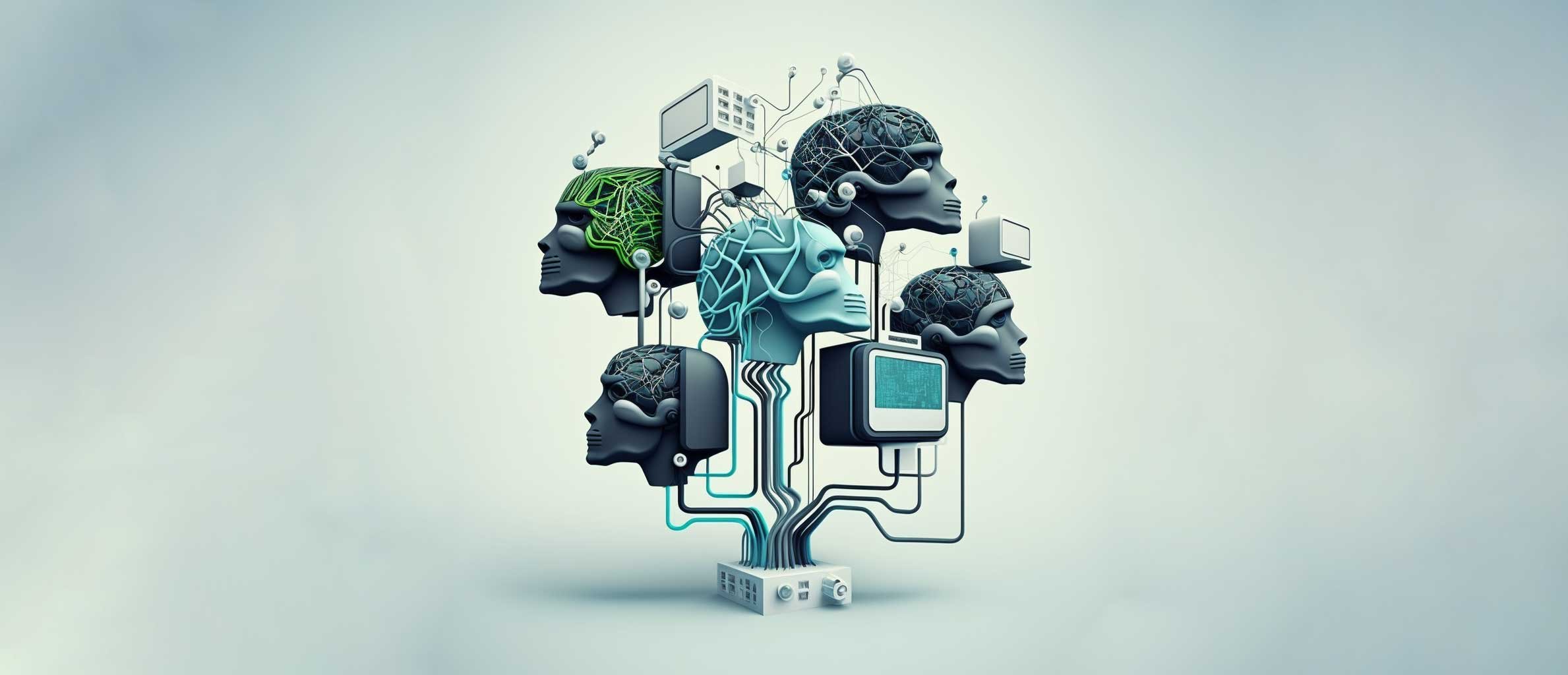
Robot brains connected to screens - Generated with Midjourney
UPDATE 2.6.23—I’ve decided to correctly refer to these systems using their actual technologies (i.e. ML—Machine Learning) rather than the market-speak and false narrative of AI (Artificial Intelligence). The article has been updated accordingly.
As I write this ML (machine learning) is revolutionizing the way we approach UX (user experience) research and design. One of my biggest hopes for the technology is for it to help designers overcome the dearth of creativity in the modern web, creating new experiences that are unique, usable, and accessible.
One of the ways ML is doing this is through services like ChatGPT. ChatGPT is a large language model that can generate human-like text, which can be used to create more natural and engaging interactions between users and digital products. Imagine integrating it into existing sites to replace some intake forms. This can help humanize the web by making interactions with digital products feel more natural and personal, even conversational. Or instead of working to tweak your Google query to find the right website, just ask chat your question in plain language and get the data you're looking for directly.

Screenshot of a ChatGPT prompt to summarize this article
Another great way to utilize ML like ChatGPT is by integrating it into existing sites in the form of support, chat, and even forms. This can help humanize the web by making interactions with digital products feel more natural and personal. Imagine filling out a form that can understand and respond to your input in a conversational manner, making the process less tedious and more enjoyable. By using ML in this way, we can create a more seamless and enjoyable experience for users on the web, making them feel like they're interacting with a real person, rather than just a machine.
Here are just a few ways it's already happening today.
ML can assist designers in creating accessible experiences. ML-powered tools and plug-ins can analyze designs and identify accessibility issues, providing designers with instant, actionable feedback. This can help designers ensure their designs are inclusive and can be used by a diverse range of users.

Blind woman reading with ML-enhanced glasses - Generated with Midjourney
ML can nudge designers to expand their creativity by equipping them with tools and insights to inspire new ideas and approaches to design. ML could analyze user data and behavior, providing designers with valuable insights into how people interact with digital products more quickly.
ML-powered tools like Ando can inspire designers in generating new design solutions through the use of generative design techniques. These techniques use algorithms to generate multiple design options based on a set of design constraints and goals. This can help designers explore a wider range of design possibilities quickly leading to more innovative and unique solutions faster.
ML can work in the implementation of designs by automating repetitive tasks like alternate version generation, layout, and optimization. This can free up designers to focus on the more creative aspects of their work, leading to more efficient and effective design processes where designers spend more time on the things they love, and less on the things they don't.

Mobile app to purchase stock - Generated by Midjourney
ML can be a valuable tool for designers, providing them with new insights, inspiration, and automation capabilities that can help them create more unique, usable, and accessible experiences on the web. As designers, we should rejoice in the future as ML tools become more available (and usable) to create truly unique and usable experiences accessible to everyone.
If you have other suggestions of how ML can positively enhance modern design work drop me a line! As to the negative aspects, I'll need to address that in a follow-up post.
Author’s note: This article was written with the assistance of ChatGPT, with a GPTZero score of “81.4: text is likely human-generated”

Landing page for a window company - Generated on Midjourney by @ToggleWords